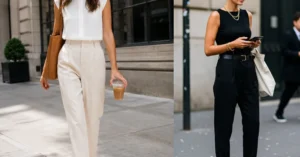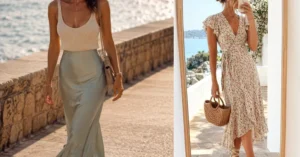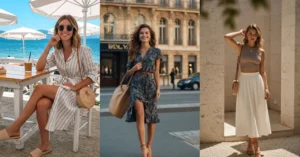

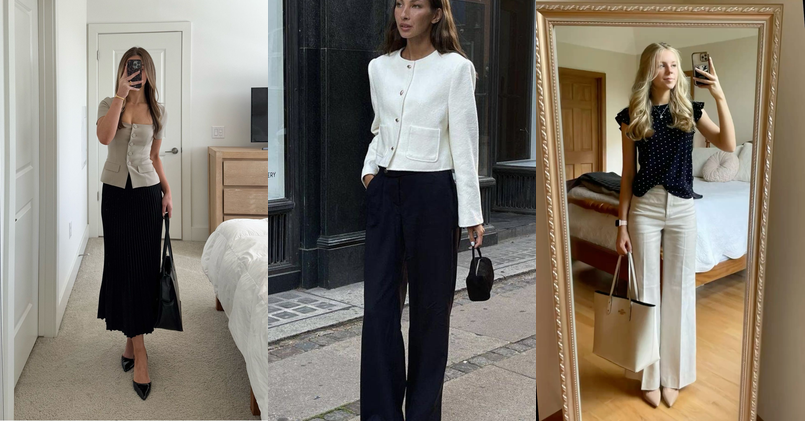
Office outfits are not about dressing like someone else’s idea of professional. They are about building a small set of combinations you can reach for on a Monday without standing in front of your wardrobe trying to think. I have been refining mine for years: separates that survive back-to-back calls, layers for over-air-conditioned buildings, and shoes that can get me across the city between appointments without destroying my feet by noon.
These are 10 office outfits I would actually wear. Not costume pieces for a job interview, not editorial fashion that falls apart in a real commute. Each one has a logic: why this proportion, why these shoes, when it works and when it doesn’t.
When Monochrome Does the Heavy Lifting
Monochrome is the closest thing to a guaranteed outcome in office dressing. When every piece is in the same family, the silhouette does the work rather than the individual items. I reach for these on mornings when I haven’t had enough coffee to think about contrast.
All-Black With a White Shirt: The Formula That Never Fails
Head-to-toe black with a white shirt is the office formula I trust most when the day has back-to-back calls and I cannot afford to think about what I am wearing. The blazer provides structure without effort, the trousers keep the silhouette clean on video, and the white shirt creates just enough contrast that the outfit doesn’t disappear into itself.
The reason this works is that each piece is doing a specific job: the blazer signals I am here to work, the trousers keep the line proportional on camera, and the white shirt brings the eye upward toward the face. Ankle boots add enough visual interest at the hem that the look doesn’t feel like a costume. I steam the shirt the night before and choose trousers with a real crease pressed in. A thin belt and a watch. That is the complete picture; adding anything else tips it toward overdressed.
Black Tweed in a Monochrome Column
Monochrome tweed is satisfying because it looks intentional from across a lobby and interesting up close. The texture of the jacket replaces the need for print or color when your workplace prefers quieter clothes, and pairing it with black trousers makes the whole outfit read as considered rather than safe.
I wore a near-identical combination to a buyer dinner where most people arrived in navy. The question I got was about the jacket weave, not whether I was overdressed. That is always the sign that a formula has found its range. Loafers keep this outfit grounded for long days on your feet; swap them for a block heel if the evening extends past dinner.
White Cardigan, Black Midi Skirt: The Quiet Version
Monochrome with a cardigan instead of a blazer is my choice for spring offices that over-air-condition from April. The midi skirt feels refined, kitten heels keep it feminine without pushing into evening territory, and the cardigan is soft enough to wear all day without that pulled-shoulder feeling you get from a structured jacket by 4 p.m.
I button the cardigan for the walk in and open it at my desk. This is also a reliable template for work lunches: swap heels for a sleek flat and add one considered earring, and the outfit stays professional while reading as less corporate than a full blazer set. The palette does the credibility work so you don’t have to.
The Neutral Build: Beige, White, and the Soft Authority They Create
Neutral palettes in an office context communicate something specific: I thought about this without trying too hard. The combination of soft tones and precise tailoring is what I think of as “soft authority,” and it tends to read well in both formal and creative work environments.
White Button-Down With Beige Tailored Trousers
A crisp white shirt with beige tailoring is what I wear on days when I need to look approachable in the first five minutes of a meeting, then hold authority once we start reviewing figures. The softness of the beige prevents the outfit from feeling stiff; the precision of the cut prevents it from feeling casual.
I tuck fully for formal rooms and do a soft half-tuck for creative teams. White heels lengthen the silhouette; tan loafers are correct when I am walking between sites. The key is that the trouser fit is doing most of the work here: a sloppy trouser makes the shirt look wrong, but a well-cut one makes the whole combination look intentional. If you want to build from a wider wardrobe, I keep business casual outfits in rotation for days when denim is allowed and the rules loosen.
White Tweed Jacket With Black Trousers and Ballet Flats
A white tweed jacket reads expensive in lobby light while remaining practical on a commute. Black trousers underneath ground the look so the texture of the jacket stays as the focal point rather than the whole outfit feeling high-effort. Ballet flats let you move fast between floors without changing shoes mid-day, which matters more than their heel height suggests.
I treat tweed as a texture play rather than a seasonal trend piece. Keep jewelry small and let the jacket carry the visual interest. On stricter dress-code days, I swap flats for a low block heel and carry a structured bag: same jacket, different register. The outfit covers a wide range of office cultures without changing its actual components.
White Shirt With a Beige Pencil Skirt
A pencil skirt with a white shirt is the fastest way to look composed when you are short on time. The skirt defines the waist, the shirt keeps the top half clean, and heels or pointed flats finish the line for anything involving a presentation or a client walk-through. There is a reason this combination has not dated: the proportion is geometrically reliable in a way that trends are not.
I choose pencil skirts with a touch of stretch so sitting through long reviews doesn’t become uncomfortable by hour three. If the skirt reads too formal for your specific office, copy the same white shirt contrast with cropped trousers and keep the pointed shoe. The proportion logic is the same; the context shifts to somewhere between polished and casual in a way that works in creative environments.
Beige Vest Blouse With a Black Maxi Skirt
The vest blouse and long black skirt combination feels Parisian in a quietly minimal way. The vertical line is useful for tall frames, and a belt adds waist definition when the proportions need it. Kitten heels keep the look practical for days that involve a lot of standing or moving between rooms rather than staying anchored to a desk.
I wore a similar silhouette through a full day of showroom appointments without blisters, which tells you something real about the shoe choice. For sharper corporate-coded days, this exact vest top pairs well with the kind of tailored trousers that feature in casual corporate outfits: same beige tone, just a different silhouette from the waist down.
Texture, Occasion, and Where Office Dressing Gets Interesting
The most useful office outfits are the ones that can extend into something else: a dinner after work, a gallery lunch, a networking event where you don’t want to look like you came straight from a meeting. These three get that balance right.
Black Top With a Silver Satin Skirt
Satin at the office only works when the top is simple and the skirt hits below the knee. This combination handles the daytime-to-evening transition better than most: the black top keeps it office-appropriate through the day, and the silver skirt changes the register in the evening when the light shifts and the fabric starts to catch it differently.
I keep the top fitted and choose a heel height I can stand in for at least an hour at a reception. One metallic accessory is enough: the skirt is already doing the visual work. If your office handbook is conservative, use the same black fitted top with charcoal trousers during the day and treat the satin skirt as a swap you make at 6 p.m. The outfit then lives two entirely separate lives in one working day.
Black Blouse With Beige Linen Trousers
Linen trousers signal summer Fridays but the pointed black blouse pulls the look firmly back into office territory. The key is choosing linen with a real crease pressed in: unstructured, wrinkled linen reads as “beach” and structured linen reads as “considered.” That single distinction decides whether this outfit works before 9 a.m.
When heat becomes a real problem, I swap closed shoes for a polished sandal only in offices that allow it. Otherwise I keep the same top and borrow ideas from summer work outfits to shift the formula toward lighter fabrics without rebuilding it from scratch. The color pairing stays the same; the weight of the cloth changes.
Olive Blazer With Dark Wide-Leg Jeans and Ballerinas
This is stealth chic for creative offices: dark wide-leg jeans, an olive blazer, and soft ballet flats. The blazer adds authority; the denim adds ease. The combination works because the blazer is structured enough that it takes the denim into office territory rather than the denim pulling the blazer into weekend territory. That balance is specific and can tip either way depending on fit.
I only wear this when the denim wash is clean and the hem is full length. I skip distressed details and keep whatever is underneath the blazer solid: a simple tee or a thin fitted top. If denim is banned in your building, copy the olive blazer with black cropped trousers and the same shoes. You keep the color story without fighting the policy. Office dressing gets easier once you stop treating the rules as a constraint and start using them as a design brief.
FAQ
What should women wear to the office?
Tailored trousers or a skirt in a neutral tone, a crisp shirt or fitted blouse, and closed-toe shoes you can stand in past lunch. Add one personal detail: a texture in the jacket, a specific shoe shape, or jewelry that doesn’t compete with the face. The goal is to look like you made a decision, not like you assembled a costume.
How do I look polished at the office without wearing a full suit?
Match a structured top with a clean bottom, steam your fabrics before the week starts, and keep your shoes scuff-free. Monochrome and neutral pairings consistently read more polished than busy print combinations. The fit of the trouser or skirt carries more visual weight than most people expect.
Are jeans appropriate for office outfits?
In many creative offices, yes: if the denim is dark, full length, and paired with a blazer or structured blouse. Conservative environments usually prefer the same wide-leg silhouette in a tailored fabric. You get the same proportion without the debate about the dress code.
What shoes work best with office outfits?
Loafers, pointed ballet flats, low block heels, and clean ankle boots cover almost every office situation. Choose what you can walk in between meetings: a shoe that works for a commute and a full working day will serve you better than one that only makes sense behind a desk.