
The first time I spent a full autumn week in Florence, I kept trying to figure out what made everyone look so put together. It wasn’t the clothes exactly. It was the absence of anything wrong. A woman in a camel coat and dark trousers crossing a piazza in October looked like she’d been assembled by someone who understood proportion. She had. That’s not luck in Italy. It’s a habit.
What I’ve collected here are looks that illustrate how that habit actually works in practice. Some I’ve worn versions of myself. Others I’d adapt. But each one captures something specific about how Italian women dress in autumn, and it’s more useful to look at actual outfits than to talk about principles.
The Neutral Foundation
The color palette in northern Italy in autumn shrinks to almost nothing. Beige, camel, stone, cream, black. In most cities, this would look safe. In Italy, it looks intentional, which is different. When color isn’t doing the work, fit has to. That’s the deal.
Beige Turtleneck and Tailored Trousers: The September Standard
A beige turtleneck with high-waisted tailored trousers is the look I saw most often in September in Bologna. The white heel caught me off guard the first time. It keeps the look from going heavy, which is the right call when everything above the ankle is structured and warm-toned.
The Belt That Changes Everything
Wide-leg trousers, a white blouse, a woven belt. I’ve watched this combination appear in some variation on every autumn trip. The belt matters more than it looks like it should. Without it, the white blouse becomes untethered. With it, the whole outfit has a midpoint, something for the eye to land on before it moves anywhere else.
Sneakers Done the Italian Way
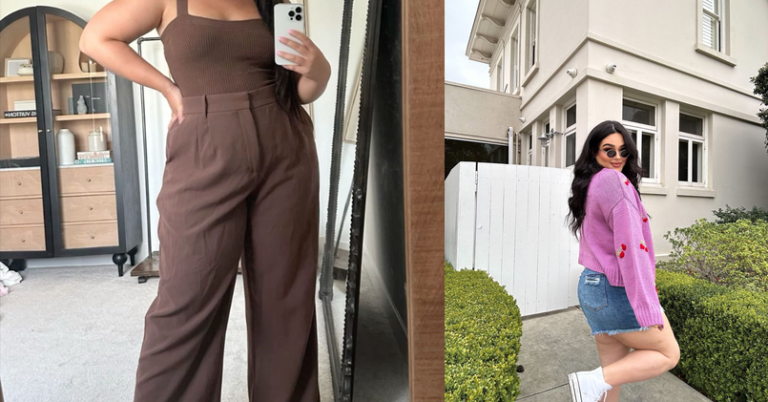
Cream knit cardigan, brown wide-leg trousers, white sneakers. What I noticed watching Italians wear sneakers is that the rest of the outfit is always doing the work the sneaker isn’t. The cardigan fits. The bag is solid and considered. The trousers are tailored. The sneaker gets to be casual because nothing else is giving it that excuse.
The Crop Top in October: More Roman Than Milanese
Cuffed beige trousers with a fitted crop top and metallic brogues. This feels Roman to me rather than Milanese. Rome in early October runs warmer and looser than Milan in the same month. The metallic brogue is doing the right thing here: it adds interest without complicating the palette.
Outerwear Is the Statement
My experience in Italy has convinced me that outerwear is where the budget goes. The coat stays on for three, four hours. It’s what anyone sees first. On a cold November morning in Milan, I once watched a woman whose coat was so well-made I spent time trying to work out the fabric. Everything else she was wearing was secondary. If you’re thinking about what kind of coat actually works for this type of Italian autumn dressing, fashionable winter coats built on fabric and silhouette rather than trend are the closest equivalent.
Tonal Plaid: Coordinated Without Matching
Olive green plaid blazer worn over a matching turtleneck. I’d wear this. The coordination here is tonal, not matching, which is a real distinction. Matching means you bought a set. Tonal means you chose two pieces that occupy the same color space. One feels purchased. The other feels considered.
The Bold Coat Over Neutrals
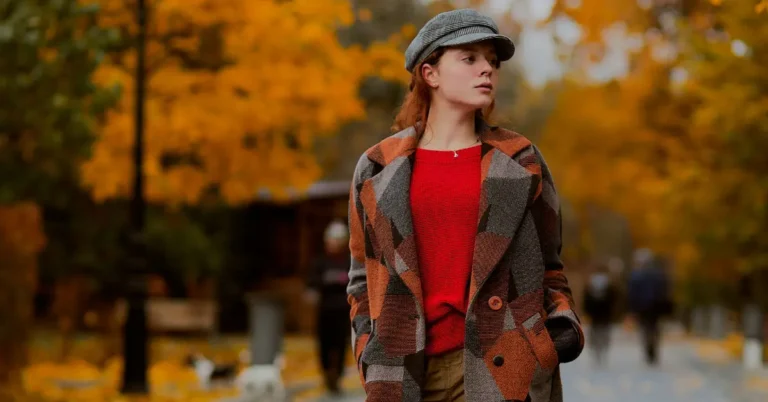
A multi-color plaid coat over a neutral base. The coat is the complete statement. The clothing underneath is just there to keep the coat company. What I find interesting about this approach is that it requires more conviction than building a complicated outfit. The instinct is to add things. Italian dressing often runs the other direction.
Houndstooth Blazer and Turtleneck: A Proven Formula
Houndstooth blazer, black turtleneck, wide-leg trousers. I wear a version of this every autumn, including to a work presentation in October where I needed to look organized without overthinking it at 7am. The blazer carries the visual weight. The turtleneck covers the warmth. Statement earrings and nothing else. It resolves quickly.
Plaid Blazer as a Jacket: The Mini Skirt Edition
A tailored plaid blazer with a mini skirt and heeled loafers. The blazer justifies the mini skirt structurally. Without it, the short skirt is a different kind of outfit. With it, there’s a clear top-down proportion that signals intention. The crossbody in a complementary shade is a small decision that does real work.
The Relaxed Pieces, Worn With Care
Italian casual is not casual the way North American casual can be casual. On a Saturday afternoon in Rome, I watched people in jeans who looked like they’d edited their outfit. The jeans were the right wash. The cardigan fit properly. The bag wasn’t an afterthought. Nothing was grabbed. That’s the distinction.
Black T-Shirt Into Autumn: The Trouser Trick
Black t-shirt, high-waisted khaki wide-leg trousers, black sandals. This is early September: still warm enough for open shoes, but the trouser silhouette is already pulling toward autumn. Fitted on top, volume below, nothing extra. For a more structured take on the same wide-leg logic, classy autumn outfits built around tailored trousers follow the same proportion principle with more polish.
The November Uniform in Milan
Black turtleneck, midi skirt, knee-high boots, structured bag. By November in Milan, the weather has made the choices for you: warmth, coverage, and enough polish not to look like you’re camping. This combination covers all three. I’ve seen it in some form on every November trip I’ve made to Milan. For what happens when the season goes fully cold, Italian winter fashion follows the same logic pushed further.
Colour, Used Deliberately
Color in Italian autumn dressing is always one piece. One thing gets to be the color. The rest stands aside. Four competing colors don’t happen here. One deliberate choice, supported by neutrals, makes the point exactly once. Anything more and the eye has nowhere to settle.
Tone-on-Tone in Beige: Restraint as the Statement
Loose beige top, tailored beige trousers, black stiletto. The heel is the only point of contrast. Everything else is the same color family. The conviction required to wear this much of the same color and have it look like a decision rather than an accident is specifically what makes it Italian. The instinct to add something, a scarf, a different-colored bag, is the instinct to resist.
Yellow Plaid Skirt: When You Commit to Colour Fully
Beige turtleneck, yellow plaid midi skirt, matching yellow boots. The one-color principle taken as far as it goes. Yellow is total below the waist. The neutral turtleneck above lets it land without competing. A half-commitment to yellow plaid would be worse than not trying. This works because it’s fully in.
Blue Stripe and Brown Bag: A Warm Accent in a Cool Palette
Light blue striped shirt, white trousers, brown handbag. The brown bag is doing something specific: it introduces a warm note into a cool, light palette. Blue and white together are crisp and slightly seasonal. The brown shifts that. It grounds the outfit and turns the palette into a considered combination rather than a default.
The Classic Combinations
Italian women aren’t interested in what’s new if what already exists works better. There are combinations that have been functioning for decades and they wear them with confidence, often repeatedly. The question isn’t what’s current. It’s what’s right. You can see the same sense of proportion and reliability across the broader category of gorgeous Italian outfits that recur across seasons, and the autumn versions are among the strongest.
Houndstooth Trousers and Black Turtleneck: The Autumn Standard
Black turtleneck, houndstooth trousers, pointed ankle boots. I reach for this every October regardless of what I’ve been reading about trends. The houndstooth takes care of the visual interest and everything else stays clean and uncluttered. A small clutch, nothing with hardware. It’s a combination that solved the problem so completely that no trend has found a reason to replace it.
The Draped Sweater: Warmth as Styling
Light blue button-down, white trousers, a white sweater draped over the shoulders, quilted black bag. The draped sweater is a specific Italian gesture I’ve tried to replicate. Too neat and it looks placed. Too loose and it slides off mid-block. The version that works sits loosely balanced at the shoulders with the sleeves falling forward. It looks like warmth you stopped noticing you were carrying.
Beige Button-Down and Black Trousers: The City Walk Default
Beige button-down, black trousers, ankle boots, brown handbag, round sunglasses. This is what I pack for days in an Italian city when I don’t want to make decisions in the morning. The color balance almost runs itself: beige top and brown bag against black trousers. The sunglasses end it. I’ve gotten more comments on this combination than on outfits I spent considerably more time on.
Brown Trousers and Loafers: The Most-Worn Shoe in Italy
Brown trousers, black turtleneck, black loafers. The loafer is everywhere in Italy in autumn. I’ve tracked footwear across multiple trips and it appears constantly: with trousers, with skirts, with midi dresses. It implies a decision without implying anything formal. If there’s one shoe that covers the widest range of Italian autumn situations correctly, this is it.
FAQ
How to dress in Italy in autumn?
Start with a good coat and tailored trousers. Italian autumn dressing is built on fit and fabric before trend. Keep the palette neutral and let one piece carry the visual interest. Layer progressively: lighter pieces in September, mid-weight coats in October, full wool by November. Leather shoes perform better than sneakers in most situations, and keep accessories minimal.
What to wear in Italy in September?
Southern Italy in September is still summer. Lightweight fabrics and open shoes work through the day. In Rome, a light blazer or linen layer is enough for evenings. In Milan or Florence, a light trench or mid-weight coat becomes useful from mid-September. Comfortable leather shoes are better suited to Italian streets than trainers, wherever you are.
Is September too cold for Italy?
Not at all. September is one of the best months to visit. Rome and the south stay in the low-to-mid 20s Celsius. Milan and Florence are slightly cooler but still mild. Light clothing covers most of the day. One layer for evenings is all you need. A scarf or light jacket after sunset and you’re comfortable.